A money manager approaches your brokerage with 40 investors and $2.8 million under management. He wants to trade one master account and have every fill mirrored proportionally into his investors’ accounts, with a 20% performance fee calculated automatically. Can you support that?
If the answer is no, that manager goes to a competitor — and takes the 40 funded accounts with him. Forex MAM software is the layer that makes this possible, and it is one of the highest-leverage additions a growing broker can make. This guide covers how multi-account managers work on MT4 and MT5, which allocation methods matter, and where MAM deployments typically break.
What Forex MAM Software Actually Does
MAM stands for Multi-Account Manager. The manager places a single trade on a master account, and the MAM engine splits that order across every linked investor sub-account according to a defined allocation rule. Each investor keeps their own account, their own balance, and their own equity curve — they simply receive a proportional slice of every position the manager opens.
Critically, the investor’s funds never leave their account. The manager gets trading authority, not custody. That distinction is what makes MAM acceptable in jurisdictions where pooled fund structures would require a separate asset management licence.
Three parties interact with the system:
- The manager trades the master account and collects performance and management fees
- The investor deposits into their own account, links it to a manager, and can detach at any time
- The broker hosts the infrastructure, earns spread and commission on the aggregate volume, and often takes a cut of the manager’s fee
The Allocation Methods That Matter
Allocation is where most brokers under-specify their requirements. A manager evaluating your platform will ask which methods you support, and “proportional” is not a sufficient answer. These are the six that appear in serious mandates:
| Method | How It Splits | Typical Use |
|---|---|---|
| Lot allocation | Fixed lot size per investor, set manually | Small groups with agreed exposure |
| Percent allocation | Fixed percentage of master volume | Managers wanting tight control |
| Proportional by balance | Share of total balance across the group | Most common default |
| Proportional by equity | Share of total equity, floating P&L included | Groups with open positions carried over |
| Equal risk | Same percentage risk per account regardless of size | Risk-parity mandates |
| P&L allocation | Trade closed on master, profit distributed after | Legacy MT4 setups |
Proportional by equity is the method most experienced managers request, because it accounts for unrealised profit and keeps relative exposure stable as the group’s equity moves during the session.
Forex MAM Software on MT4 vs MT5
The two platforms handle multi-account management quite differently, and the difference has practical consequences.
On MT4, MAM is delivered almost entirely through server-side plugins. The plugin intercepts orders on the master account and issues corresponding orders on sub-accounts. It works, and it has worked for fifteen years, but you are dependent on a third-party plugin vendor for stability and for compatibility with every MT4 server build.
On MT5, the platform exposes far richer server-side hooks and a more capable MT5 Manager API, so allocation logic can run as a properly supervised service rather than a black-box plugin. You get better netting behaviour, better partial-fill handling, and reporting you can actually query. If you are choosing today, build on MT5 and treat MT4 MAM as legacy support for managers who insist on it.
See our comparison of MT4 vs MT5 for forex brokers if you have not yet committed to a platform.
What Managers Need vs What Investors Need
The manager terminal
Managers want to trade from a normal MT4/MT5 terminal without learning a new interface. Everything else — group composition, allocation method, fee schedule, per-investor exposure caps — belongs in a web panel they can open alongside the terminal. If a manager has to leave the chart to place an allocated trade, you will lose them.
The investor cabinet
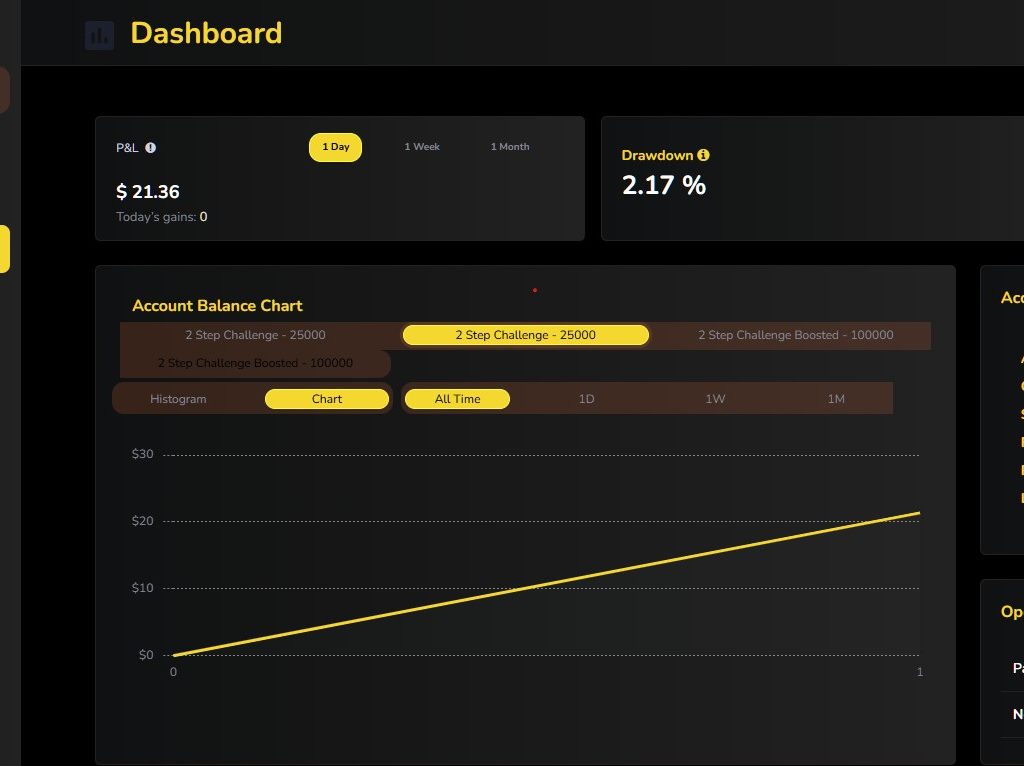
Investors need transparency far more than they need controls. In the trader cabinet they should see their own equity curve, the manager’s published track record, fees accrued to date, the current drawdown, and a one-click request to detach from the manager. Ambiguity here generates support tickets and, eventually, complaints to your regulator.
Fee Structures Your MAM Software Must Support
Fee handling is the feature most likely to be quietly missing from cheap forex MAM software, and it is the feature managers care about most.
- Performance fee with a high-water mark — the manager earns a share of profit only above the investor’s previous peak equity. Without a correct high-water mark, an investor can be charged twice for recovering the same loss, which is a genuine dispute risk.
- Management fee — a flat annual percentage of assets, typically accrued daily and debited monthly.
- Per-lot fee — a fixed amount per traded lot, favoured by managers running higher-frequency strategies.
- Broker revenue share — your cut of the manager’s fee, calculated and settled without a spreadsheet.
Fees must be calculated inside the system and settled automatically. Any manual step here will be wrong at least once a quarter, and the investor will be the one who notices.
Where MAM Deployments Go Wrong
Most forex MAM software problems are not conceptual — they are edge cases nobody tested before go-live:
- Minimum lot rounding. A 0.01 minimum lot means an investor with $300 in a $3 million group may receive nothing on small trades. Decide in advance whether they are skipped or rounded up, and disclose it.
- Partial fills on the master. If the master gets 60% filled, every sub-account must be scaled to that 60%, not to the requested volume.
- Mid-trade deposits and withdrawals. An investor funding their account while positions are open changes the allocation basis. The system must fix the basis at entry, not recompute it live.
- Manager disconnects. If the master terminal drops mid-position, sub-accounts are carrying exposure with no one watching. You need exposure caps and a stop-out policy that runs independently of the manager’s session.
Do You Need MAM, or Is Copy Trading Enough?
These solve different problems. Social copy trading is a retail acquisition feature — traders follow a signal provider voluntarily, usually with small balances and no formal agreement. MAM is an institutional feature built for a manager with a real mandate, real fee terms, and investors who expect statements.
Brokers serving retail flow should start with copy trading. Brokers who want to attract money managers and the balances that follow them need proper MAM. Most mature brokers eventually run both.
The ForexPlatforms.Pro MAM module supports all six allocation methods, high-water-mark performance fees, per-investor exposure caps, and automated fee settlement — deployed against your existing MT4 or MT5 server and integrated with your broker CRM from day one.
Frequently Asked Questions
Q: What is the difference between MAM and copy trading?
A: MAM is an institutional feature for money managers with a formal mandate, fee terms, and investor statements. Copy trading is a retail acquisition feature where traders voluntarily follow a signal provider, usually with small balances and no formal agreement. Many brokers run both.
Q: Does MAM work on MT4 as well as MT5?
A: Yes, but differently. MT4 MAM is delivered through server-side plugins from third-party vendors. MT5 exposes richer server hooks and a fuller Manager API, so allocation can run as a supervised service with better partial-fill handling and reporting. New deployments should target MT5.
Q: Which MAM allocation method should a manager use?
A: Proportional by equity is the most requested method among experienced managers, because it accounts for unrealised profit and keeps relative exposure stable as group equity moves during the session. Lot and percent allocation suit smaller groups with fixed agreed exposure.
Q: Do investor funds move into the manager’s account with MAM?
A: No. Each investor keeps their own account and their own balance. The manager receives trading authority, not custody. That separation is what distinguishes MAM from a pooled PAMM structure and keeps it outside fund-management licensing in most jurisdictions.